

Ever wondered how to transform your bedroom into a serene, stylish sanctuary?Look no further than these 18 Japandi dark wood bedroom ideas. Blending Japanese minimalism and Scandinavian functionality, Japandi is the perfect aesthetic for a calming, clutter-free sleep space. With a focus on natural materials, clean lines, and a neutral color palette, dark wood takes center stage, bringing warmth and depth to these bedroom designs.
So, what makes Japandi dark wood bedrooms stand out? Japandi dark wood bedrooms combine the elegance of Japanese design and the coziness of Scandinavian hygge. Dark wood furniture serves as the anchor, complemented by soft colors, organic textures, and simple decor. The result is a harmonious blend of tranquility and comfort, turning your bedroom into a peaceful retreat.
Ready to explore the possibilities? From sleek platform beds to nature-inspired accents, we’ve gathered a diverse range of ideas to suit every taste. Let’s dive in and discover the perfect Japandi dark wood bedroom design for your home.
Contents
- 1 Embrace the Wabi-Sabi Imperfection
- 2 Create Balance with Asymmetry
- 3 Soften with Neutral Colors
- 4 Maximize Natural Light
- 5 Incorporate Nature-Inspired Elements
- 6 Embrace Minimalism
- 7 Layer Textures
- 8 Achieve Harmony with Symmetry
- 9 Integrate Japanese-Inspired Decor
- 10 Infuse Scandinavian Hygge
- 11 Opt for Low-Lying Furniture
- 12 Add Bold Accents
- 13 Streamline Storage
- 14 Keep Styling Simple and Uncluttered
- 15 Layer Lighting
- 16 Incorporate Organic Materials
- 17 Embrace Dark, Moody Colors
- 18 Utilize Japanese-Inspired Screens
- 19 Opt for Minimalist Art
- 20 Japandi Dark Wood Bedroom
Embrace the Wabi-Sabi Imperfection
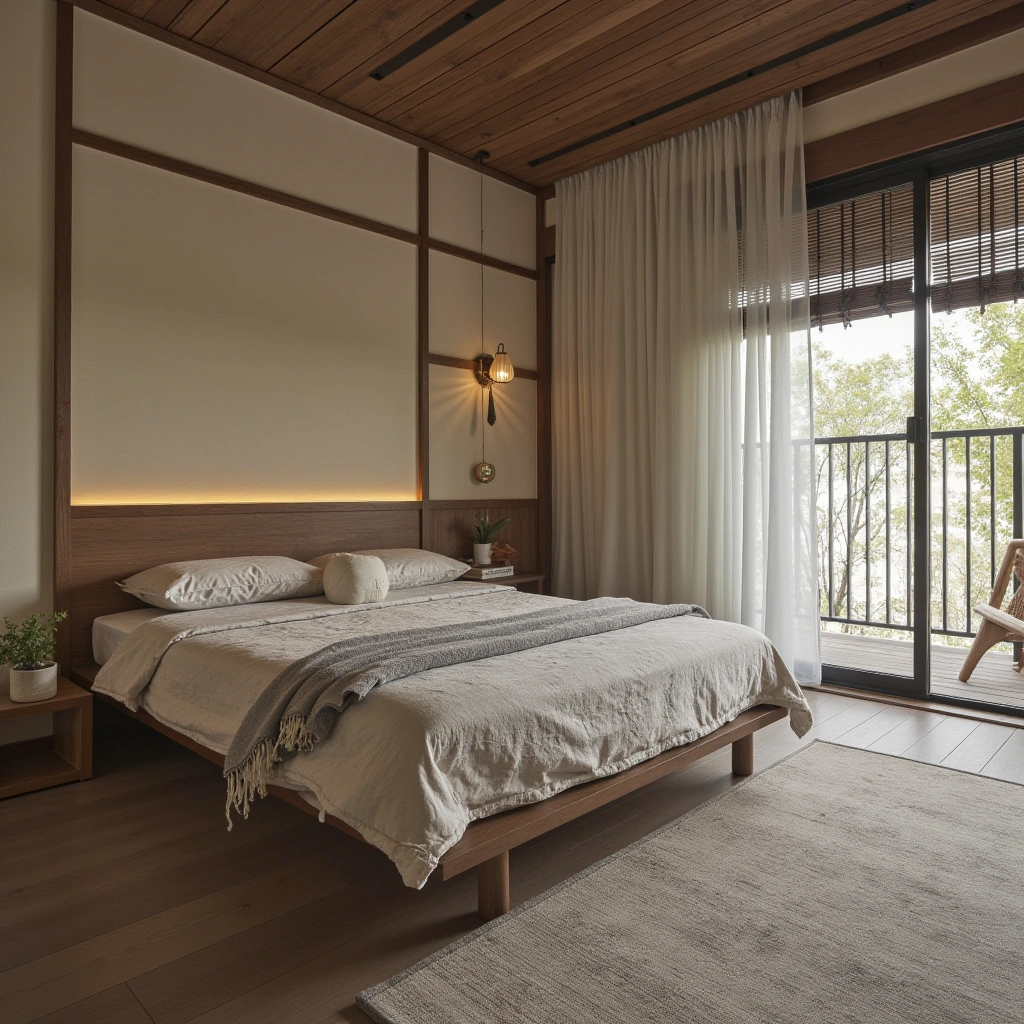
Let’s begin by embracing the beauty of imperfection with the Wabi-Sabi inspired Japandi bedroom. This design approach celebrates authenticity and natural flaws, making your space unique and personal. Opt for dark wood furniture with raw, unfinished edges, and pair it with organic textiles like linen and jute. Keep the color scheme earthy and muted, allowing the dark wood to take center stage.
Implementation Tip: Choose handcrafted decor pieces, such as pottery or woven baskets, to emphasize the imperfect, handmade aesthetic. This design works well in both modern and rustic homes, adding a touch of rustic charm to the former and amplifying the cozy appeal of the latter.
Moving on, let’s explore how to create a sense of balance and harmony with the next idea.
Create Balance with Asymmetry
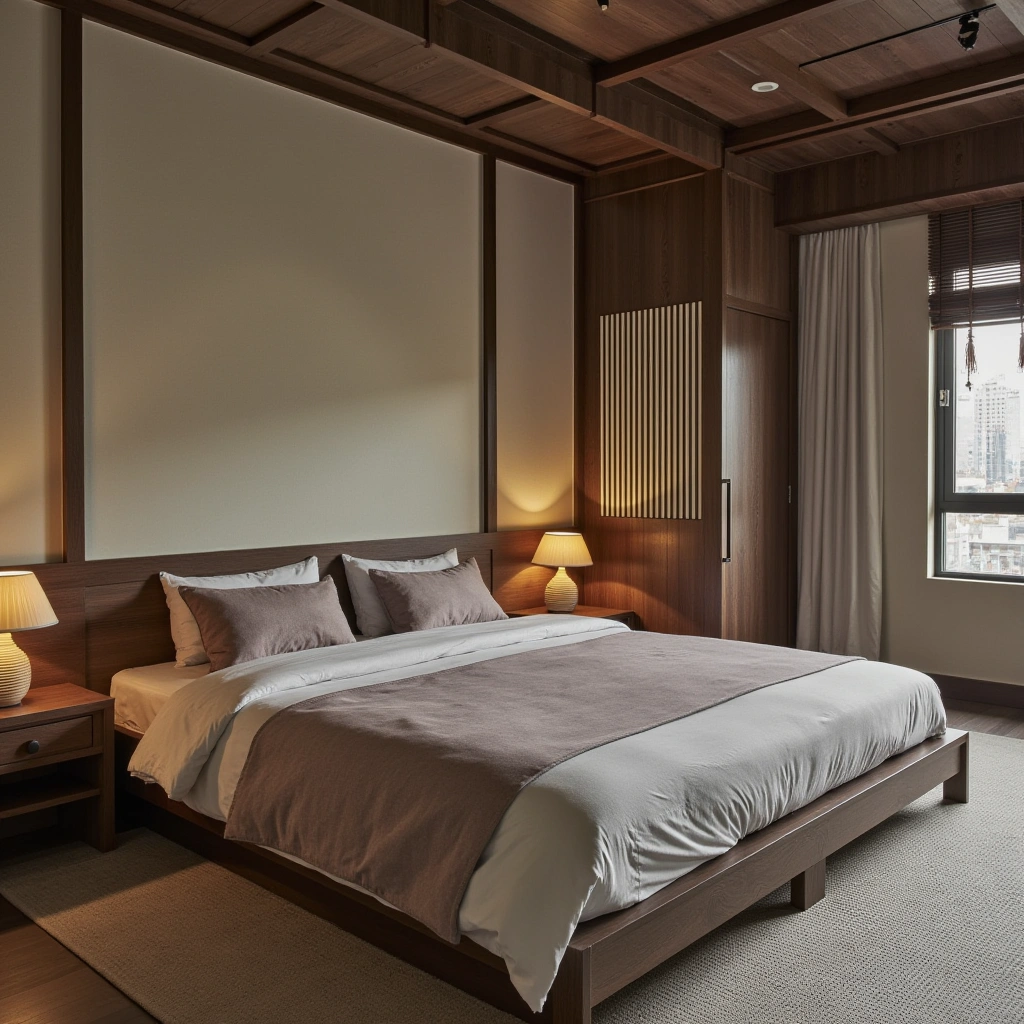
Asymmetry is a key principle in Japanese design, and it can bring a sense of balance and harmony to your Japandi bedroom. To achieve this look, mix and match dark wood furniture with varying heights, shapes, and finishes. For example, pair a low-lying platform bed with a tall, slim wardrobe, and offset them with a unique, asymmetrical nightstand.
Implementation Tip: Use the rule of thirds to arrange your furniture and decor, creating a visually pleasing composition that feels both dynamic and balanced. This design approach is perfect for modern homes, as it adds a touch of eclecticism while maintaining a clean, minimalist aesthetic.
Next, let’s dive into the world of color and explore how to integrate soft hues into your Japandi bedroom.
Soften with Neutral Colors
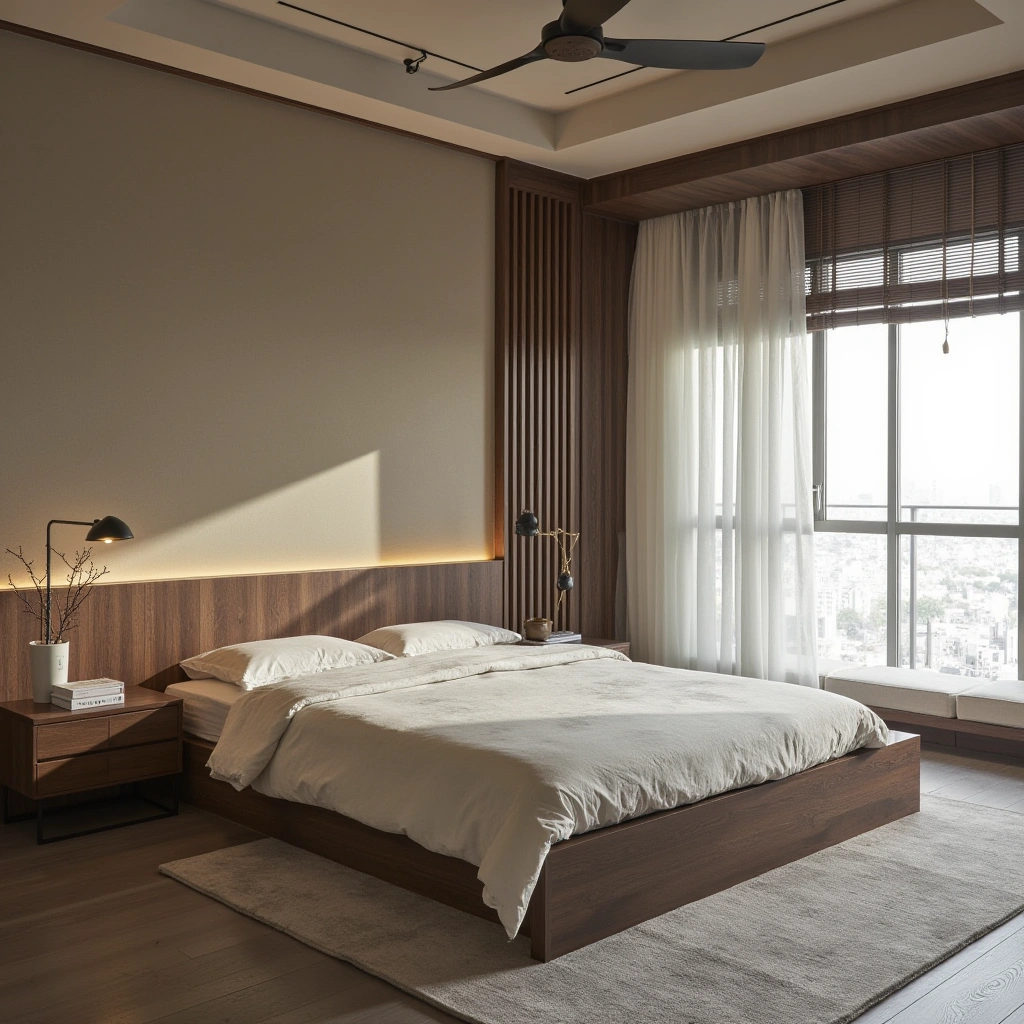
While dark wood serves as the focal point in Japandi bedrooms, soft neutral colors play a crucial supporting role. Opt for a color palette of soft whites, beiges, and greys to create a calming, serene atmosphere. These colors provide a striking contrast to the dark wood, allowing it to stand out while maintaining a sense of harmony.
Implementation Tip: Layer different shades and textures of neutral colors to add depth and interest to your space. This design approach is versatile and can be adapted to suit both traditional and contemporary homes.
Now that we’ve explored the use of color, let’s turn our attention to the importance of natural light.
Maximize Natural Light
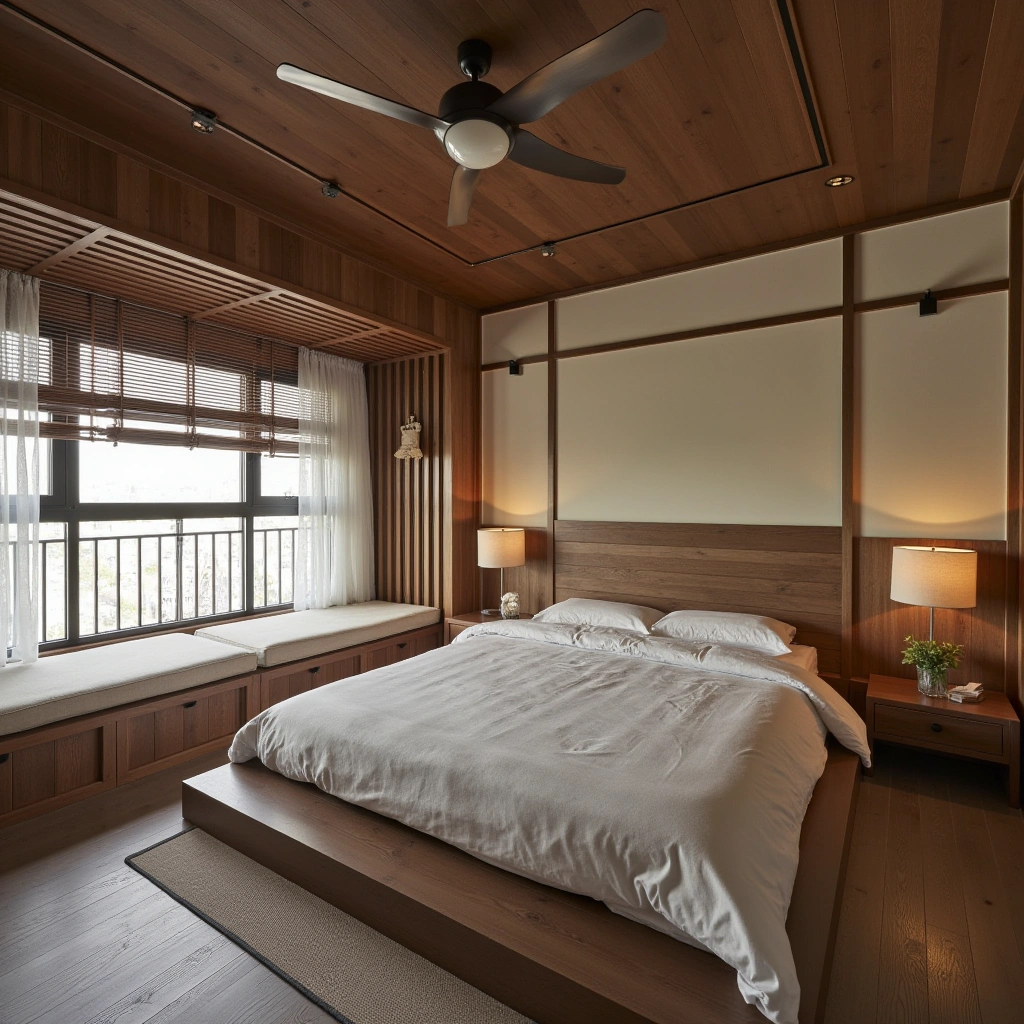
Natural light is a vital element in Japandi design, as it enhances the beauty of the dark wood and creates a warm, inviting atmosphere. To maximize natural light in your bedroom, keep window treatments minimal and opt for sheer, light-filtering fabrics. Additionally, strategically place mirrors to reflect and amplify the available light.
Implementation Tip: Position your bed and other dark wood furniture near windows to highlight their natural beauty and create a sense of openness. This design approach is ideal for small spaces, as it helps to make the room feel larger and more airy.
With natural light covered, let’s discuss how to incorporate nature-inspired elements into your Japandi bedroom.
Incorporate Nature-Inspired Elements
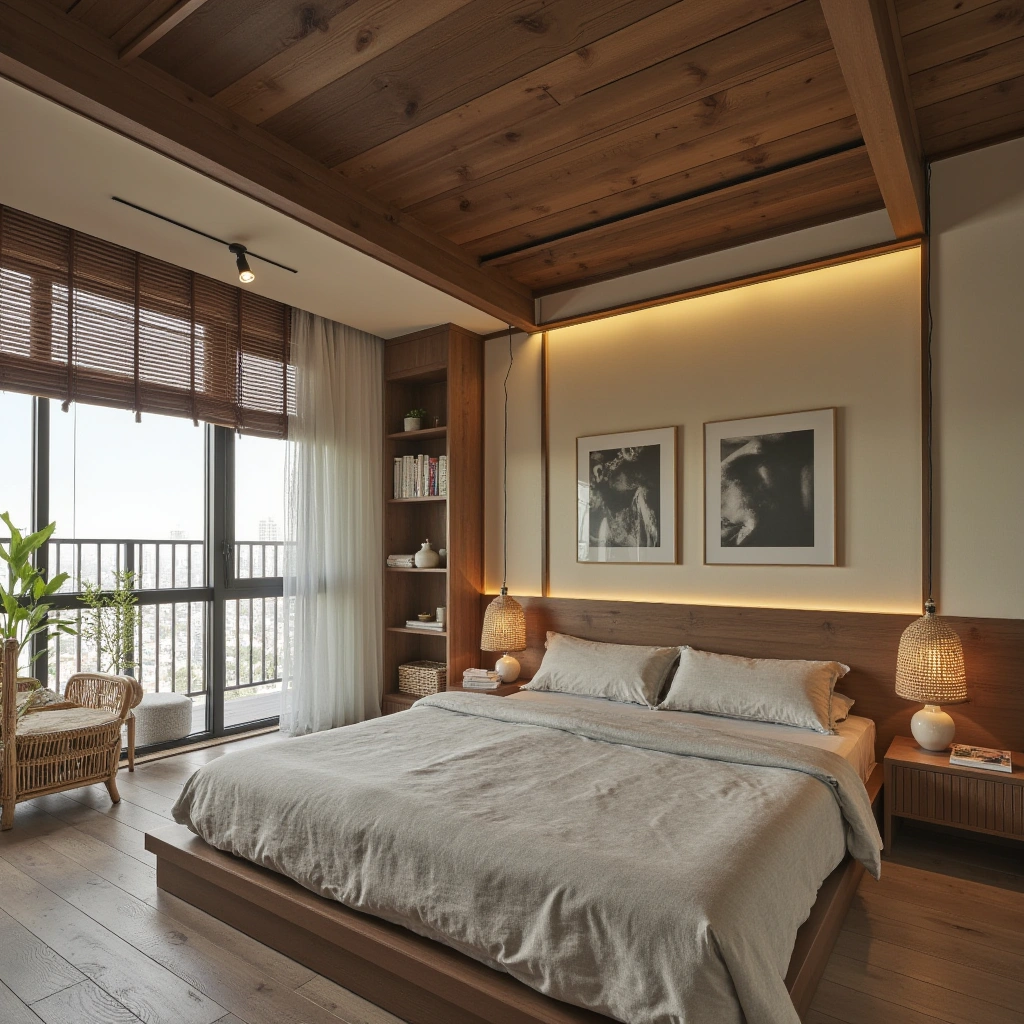
Bring the outdoors in by incorporating nature-inspired elements into your Japandi bedroom. This can be achieved through the use of organic materials, such as rattan, bamboo, and stone, as well as decorative accents like plants and botanical prints. These elements complement the dark wood furniture and reinforce the connection to nature.
Implementation Tip: Create a green oasis by arranging a variety of plants in different heights and textures throughout your bedroom. This design approach is perfect for nature lovers and those seeking a sense of tranquility in their sleep space.
Now that we’ve explored the use of natural elements, let’s delve into the world of minimalism and discover how less can be more.
Embrace Minimalism
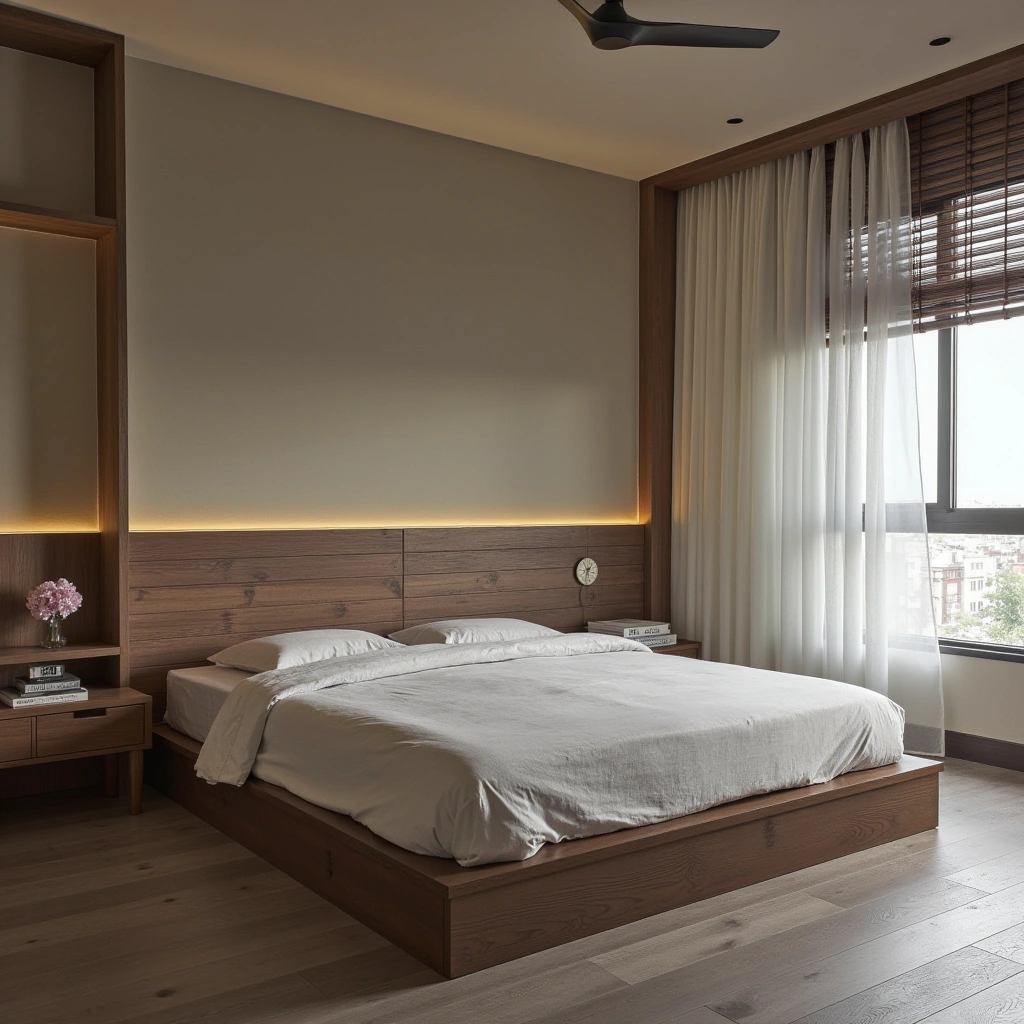
Minimalism is a core principle of Japandi design, and it can be applied to your bedroom to create a clutter-free, serene sanctuary. To achieve this look, opt for simple, clean-lined dark wood furniture, and keep decorative accents to a minimum. Focus on functionality and choose pieces that serve multiple purposes, such as a platform bed with built-in storage or a nightstand with an integrated charging station.
Implementation Tip: Adopt the “less is more” philosophy and edit your belongings down to the essentials, creating a sense of openness and calm in your space. This design approach is well-suited to modern homes, as it emphasizes the importance of simplicity and functionality.
Having explored the benefits of minimalism, let’s turn our attention to the role of texture in Japandi bedroom design.
Layer Textures
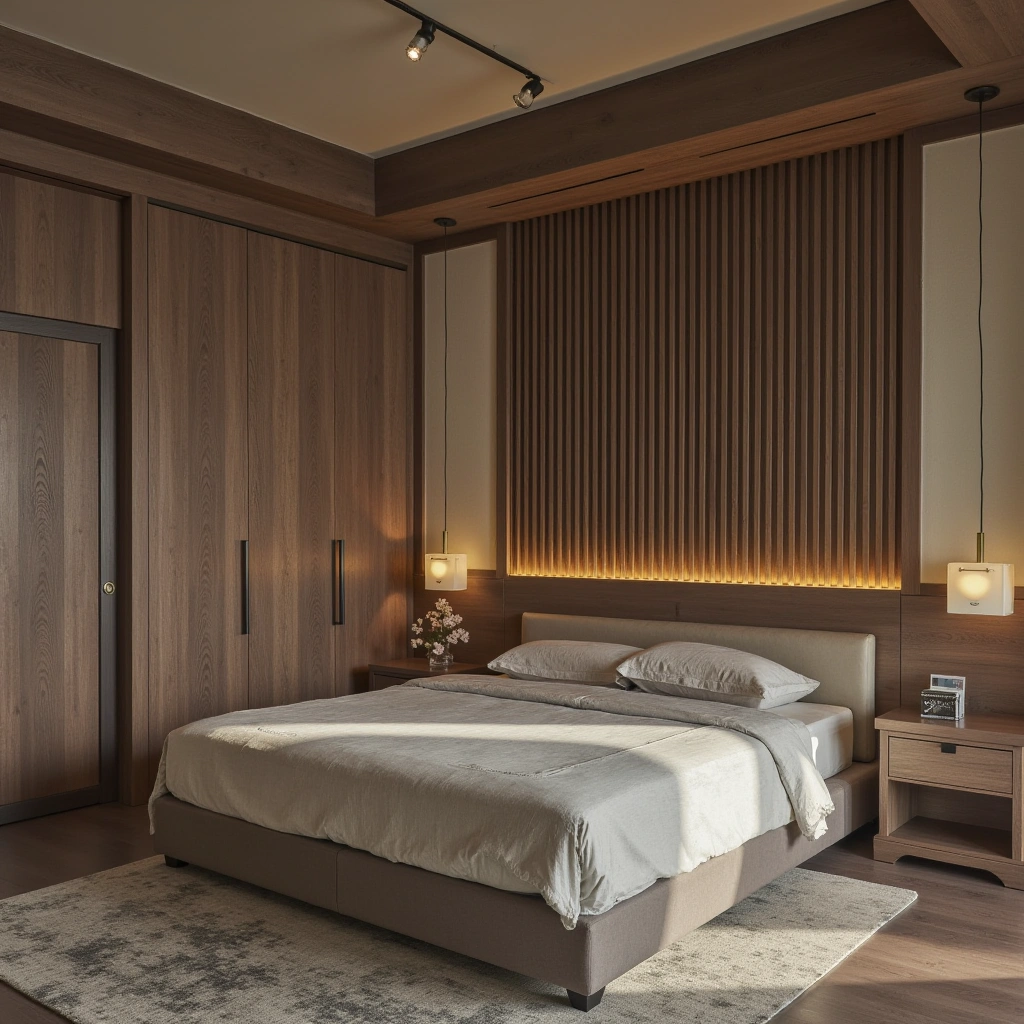
Texture plays a crucial role in Japandi bedroom design, as it adds depth, interest, and warmth to the space. To create a rich, layered look, mix and match various textures, such as smooth and rough woods, soft and coarse fabrics, and glossy and matte finishes. This interplay of textures creates a tactile, inviting atmosphere that complements the dark wood furniture.
Implementation Tip: Experiment with different textures and materials to create a unique, personalized space that reflects your individual style. This design approach is adaptable and can be tailored to suit both traditional and contemporary homes.
With texture covered, let’s explore how to create a sense of harmony and balance through the use of symmetry.
Achieve Harmony with Symmetry
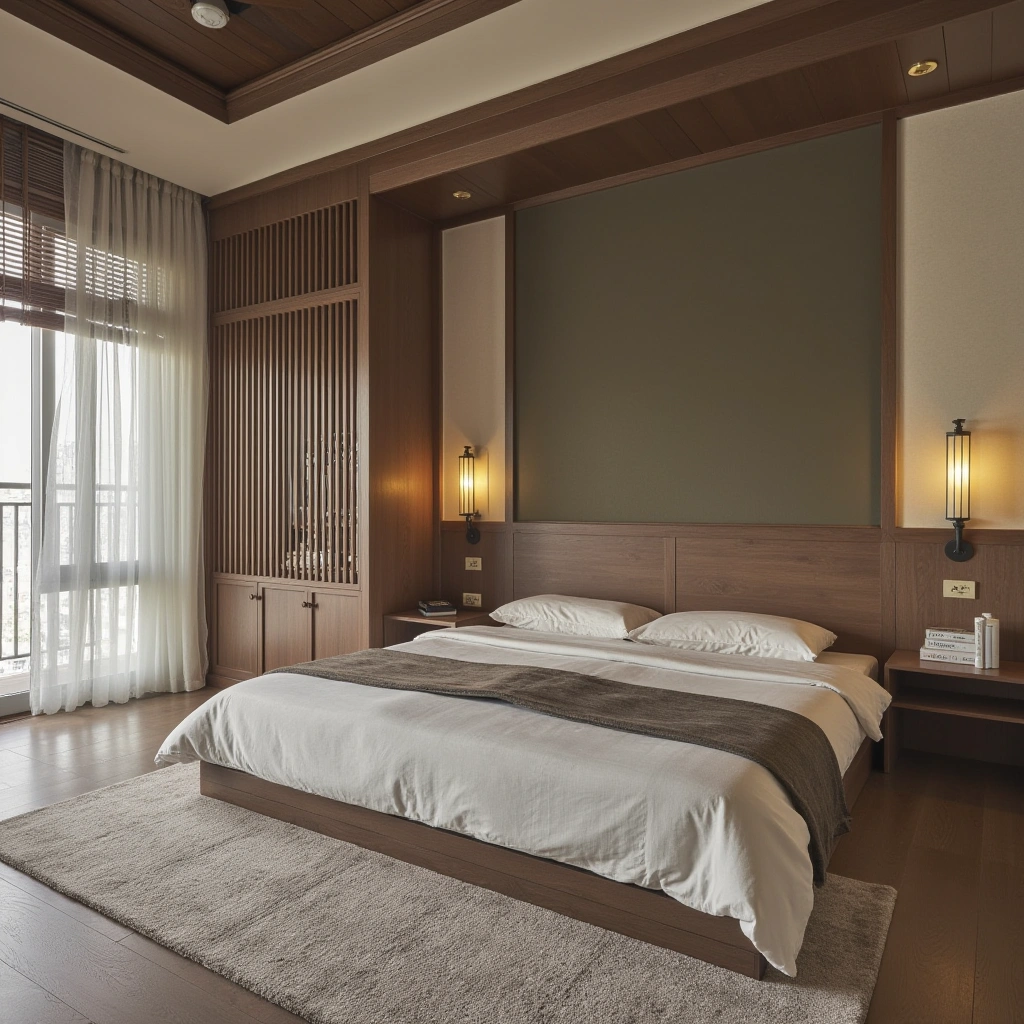
While asymmetry can create a sense of balance, symmetry is also an essential aspect of Japandi design, particularly when it comes to furniture arrangement. To achieve a harmonious, symmetrical look, pair matching dark wood nightstands on either side of your bed, and anchor them with coordinating table lamps or wall sconces.
Implementation Tip: Create a focal point by centering your bed on the largest wall in your room, and arrange your furniture symmetrically around it. This design approach is ideal for those seeking a sense of order and balance in their sleep space.
Having discussed the importance of symmetry, let’s delve into the world of Japanese-inspired decor and explore how to integrate these elements into your Japandi bedroom.
Integrate Japanese-Inspired Decor
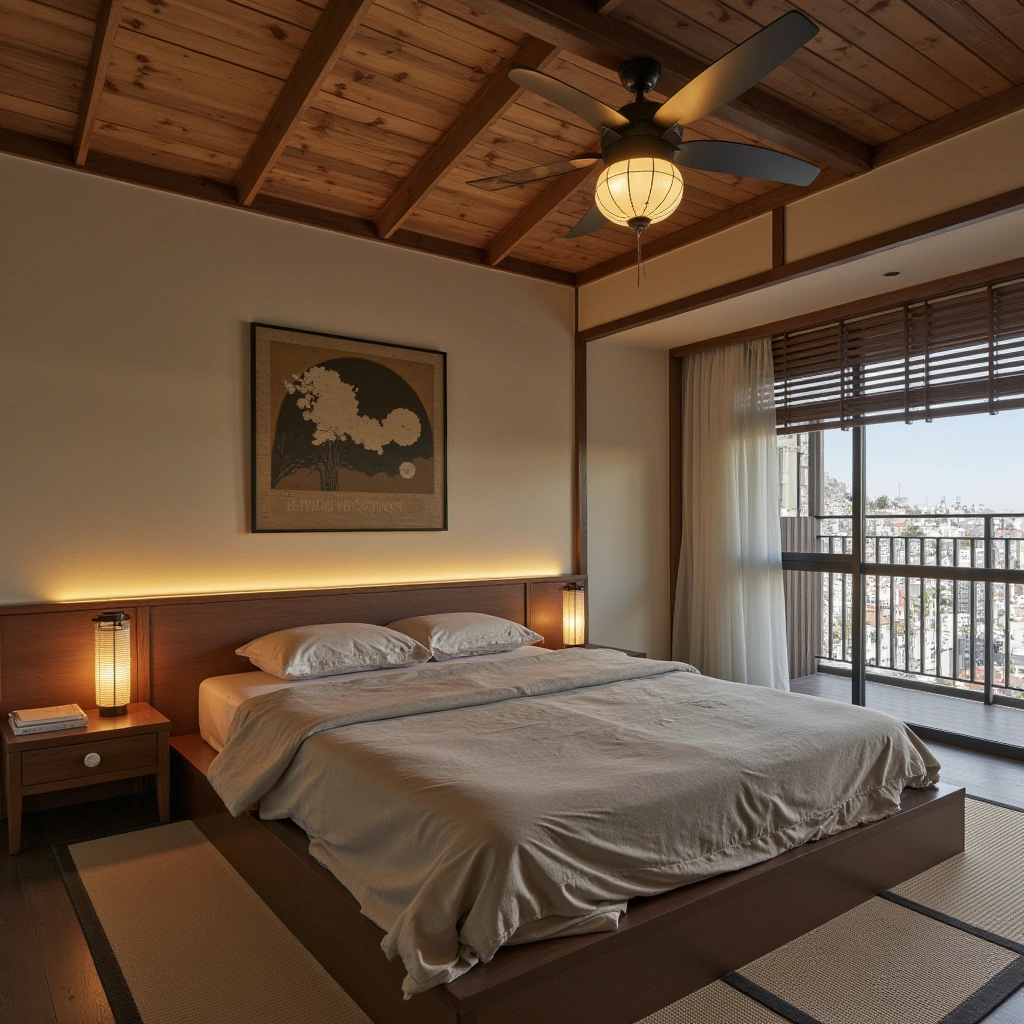
Incorporate Japanese-inspired decor elements into your Japandi bedroom to create a unique, culturally rich space. This can be achieved through the use of traditional Japanese screens, lanterns, and tatami mats, as well as decorative accents like bonsai trees and ikebana flower arrangements. These elements complement the dark wood furniture and reinforce the Japanese influence in your design.
Implementation Tip: Choose a few key Japanese-inspired pieces to serve as statement items in your bedroom, creating a sense of authenticity and visual interest. This design approach is perfect for those seeking a touch of cultural flair in their sleep space.
With Japanese-inspired decor covered, let’s explore how to create a sense of warmth and coziness through the use of hygge principles.
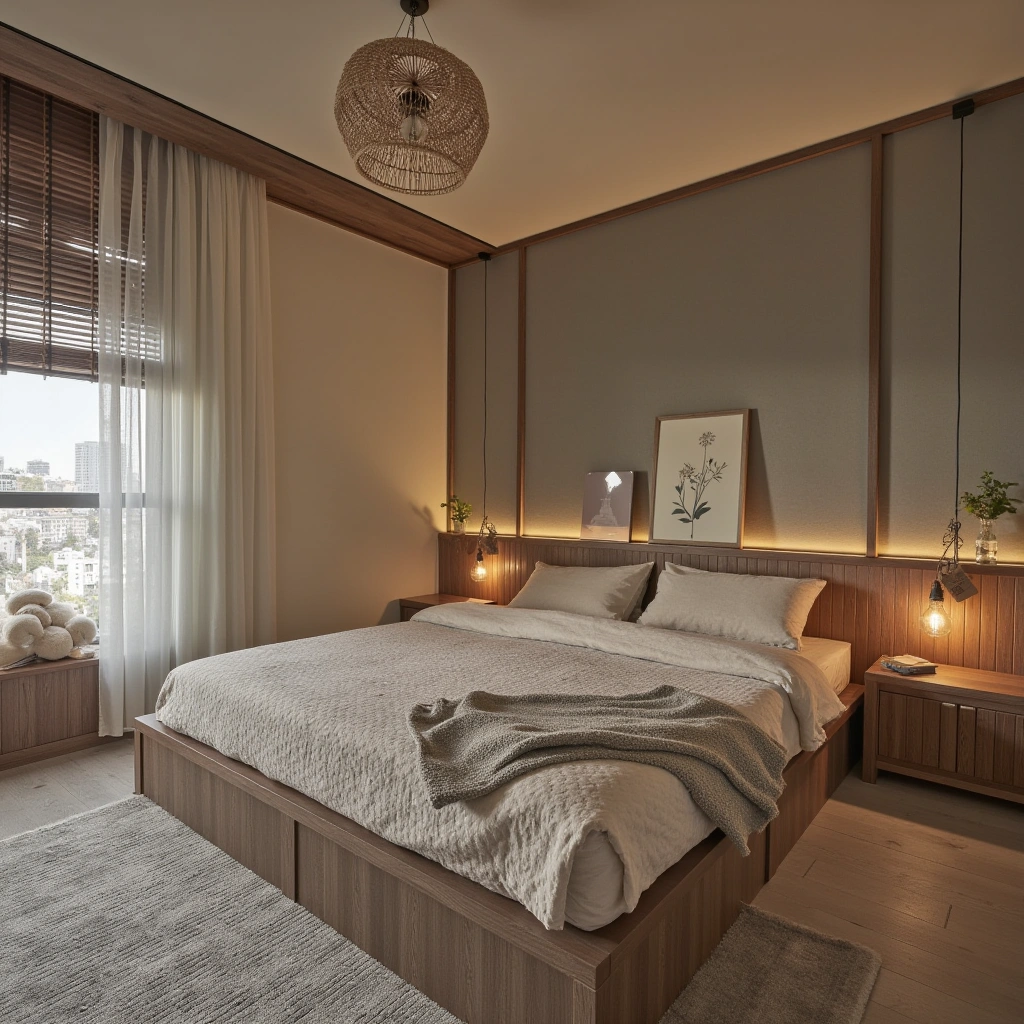
Infuse the cozy, comforting principles of Scandinavian hygge into your Japandi bedroom to create a warm, inviting sanctuary. To achieve this look, layer soft, plush textiles like wool, cashmere, and faux fur, and incorporate gentle, ambient lighting through the use of candles, string lights, and warm-glow bulbs. These elements complement the dark wood furniture and create a sense of warmth and contentment.
Implementation Tip: Establish a cozy nook in your bedroom by arranging a comfortable chair, a soft throw, and a small side table with a candle or lamp. This design approach is ideal for those seeking a sense of comfort and relaxation in their sleep space.
Having explored the benefits of hygge, let’s discuss how to create a sense of openness and flow through the use of low-lying furniture.
Opt for Low-Lying Furniture
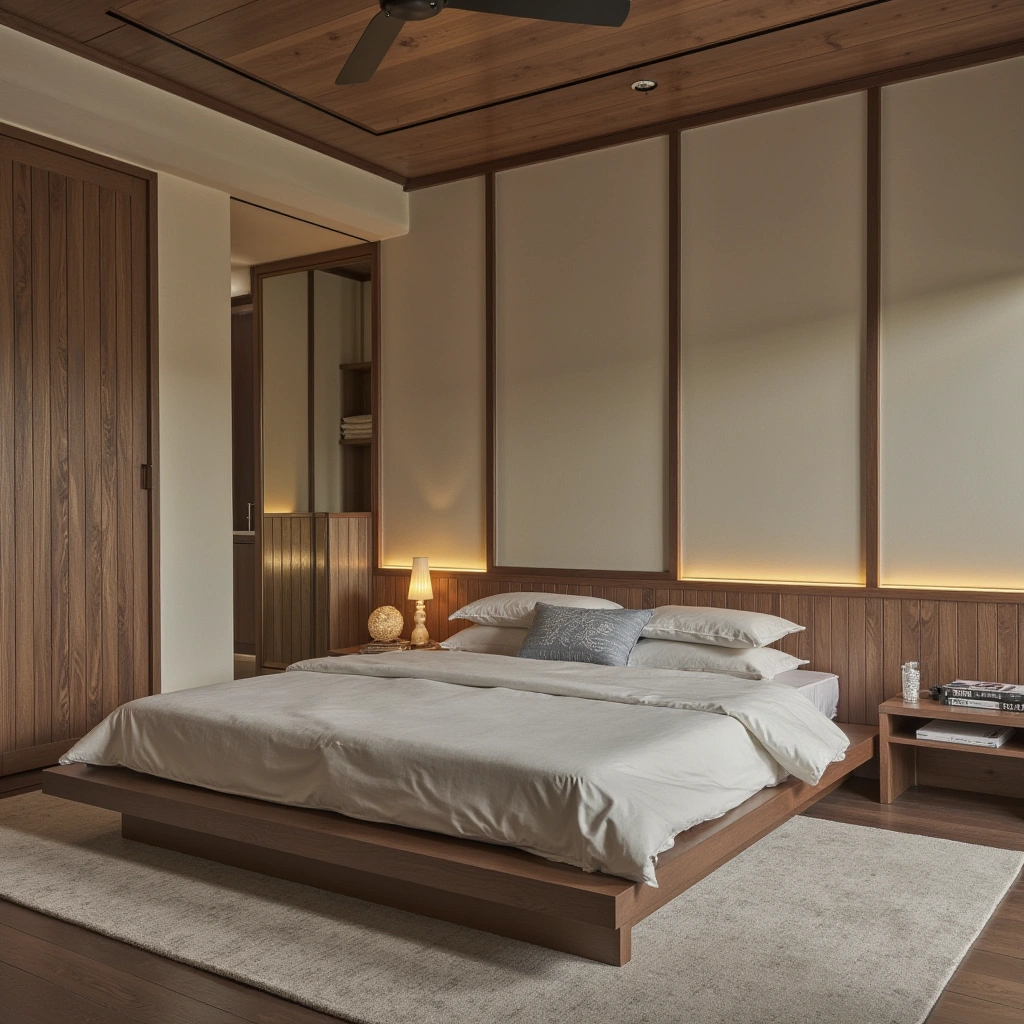
Low-lying furniture is a hallmark of Japanese design, and it can be incorporated into your Japandi bedroom to create a sense of openness and flow. To achieve this look, opt for a low-profile platform bed, and pair it with low-slung nightstands, dressers, and seating options. This arrangement allows the dark wood furniture to take center stage while maintaining a sense of spaciousness.
Implementation Tip: Choose furniture with clean, minimalist lines and a low profile to create a sense of harmony and balance in your space. This design approach is well-suited to small bedrooms, as it helps to maximize the available floor space.
With low-lying furniture covered, let’s explore how to create a sense of drama and contrast through the use of bold accents.
Add Bold Accents
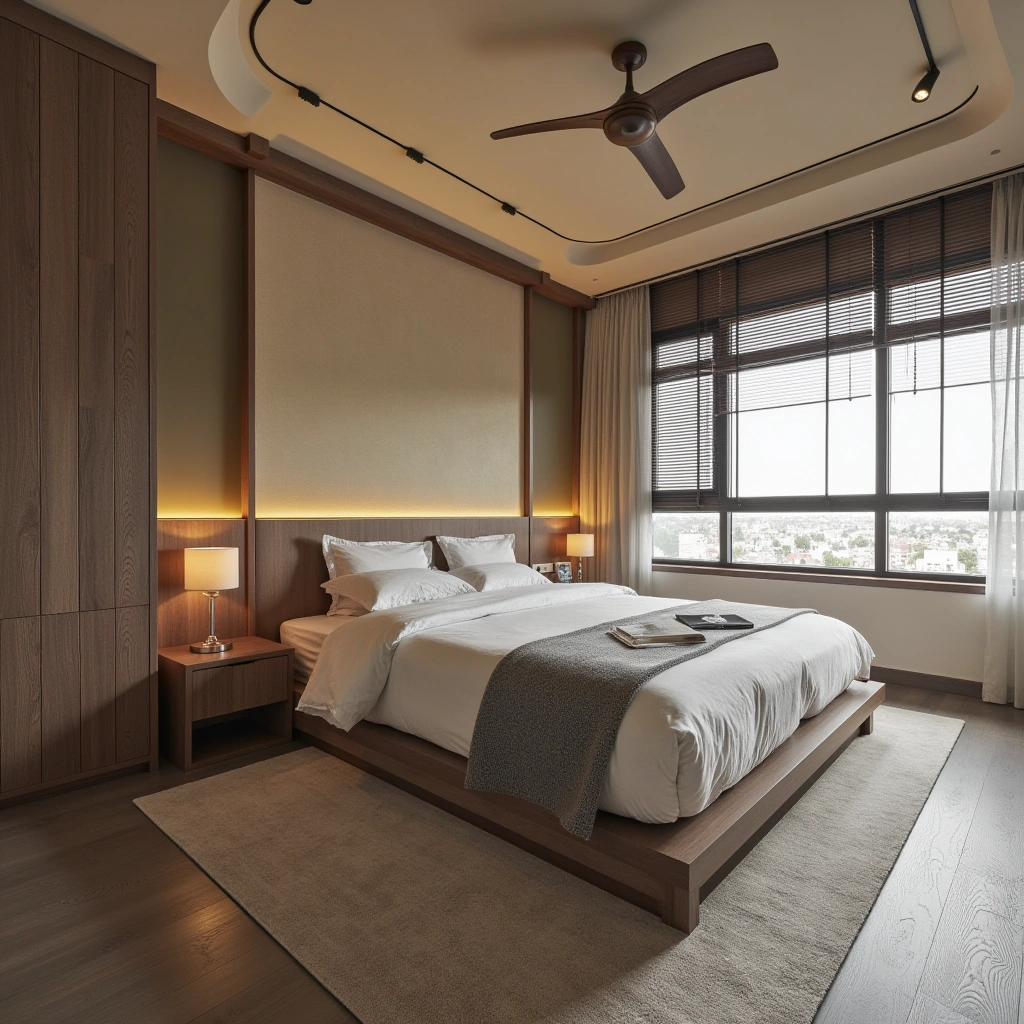
While Japandi design is characterized by its neutral color palette, incorporating bold accents can add a touch of drama and contrast to your bedroom. To achieve this look, introduce a single statement piece, such as a vibrant area rug, a colorful throw pillow, or a striking work of art, to serve as the focal point of your space.
Implementation Tip: Choose a bold accent color that complements the dark wood furniture and neutral color scheme, creating a sense of harmony and visual interest. This design approach is perfect for those seeking a touch of personalization and flair in their sleep space.
Having discussed the use of bold accents, let’s delve into the world of storage and explore how to keep your Japandi bedroom organized and clutter-free.
Streamline Storage
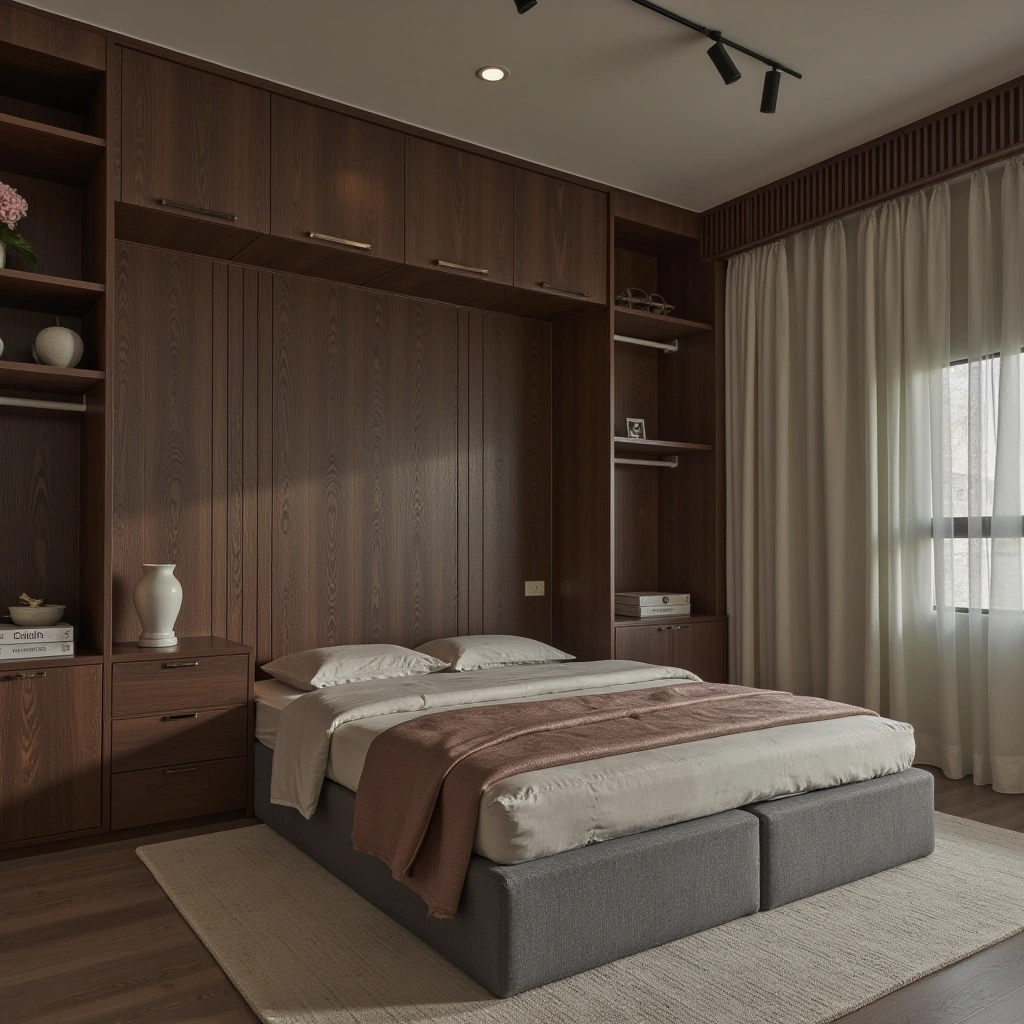
Streamlined storage is essential in Japandi bedroom design, as it helps to maintain a sense of order and minimalism. To achieve this look, opt for dark wood furniture with built-in storage, such as a platform bed with drawers or a nightstand with shelves. Additionally, incorporate sleek, modular storage solutions, like wall-mounted cabinets or open shelving, to keep your belongings organized and easily accessible.
Implementation Tip: Utilize the vertical space in your bedroom by installing wall-mounted storage solutions, creating a sense of openness and maximizing the available floor space. This design approach is ideal for those seeking a sense of organization and efficiency in their sleep space.
With storage covered, let’s explore how to create a sense of tranquility and calm through the use of simple, uncluttered styling.
Keep Styling Simple and Uncluttered
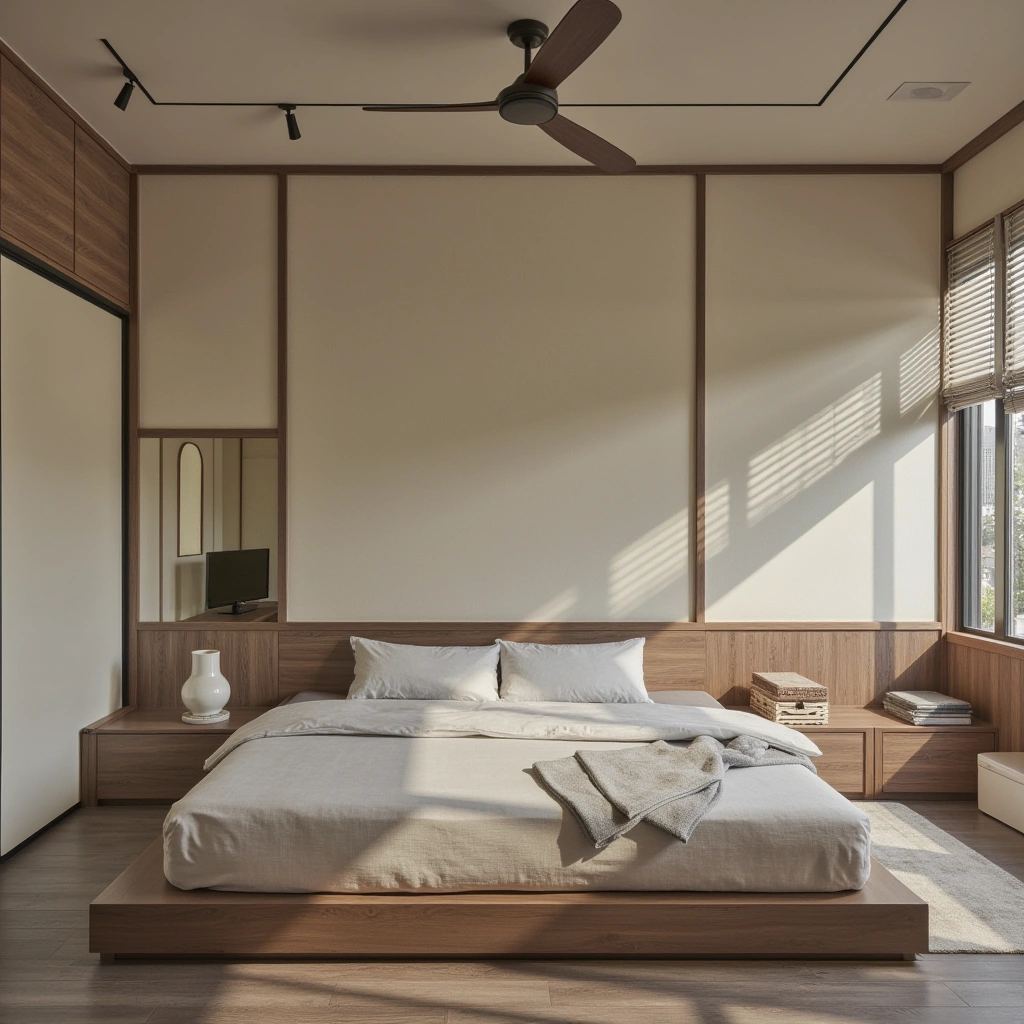
Simple, uncluttered styling is a key aspect of Japandi bedroom design, as it promotes a sense of tranquility and calm. To achieve this look, edit your decorative accents down to the essentials, and focus on a few key statement pieces that complement the dark wood furniture. Additionally, maintain a clean, minimalist aesthetic by keeping surfaces clear and avoiding excessive ornamentation.
Implementation Tip: Adopt a “less is more” philosophy when styling your bedroom, creating a sense of openness and serenity in your space. This design approach is well-suited to those seeking a sense of simplicity and clarity in their sleep environment.
Having discussed the importance of simple styling, let’s explore how to create a sense of depth and dimension through the use of layered lighting.
Layer Lighting
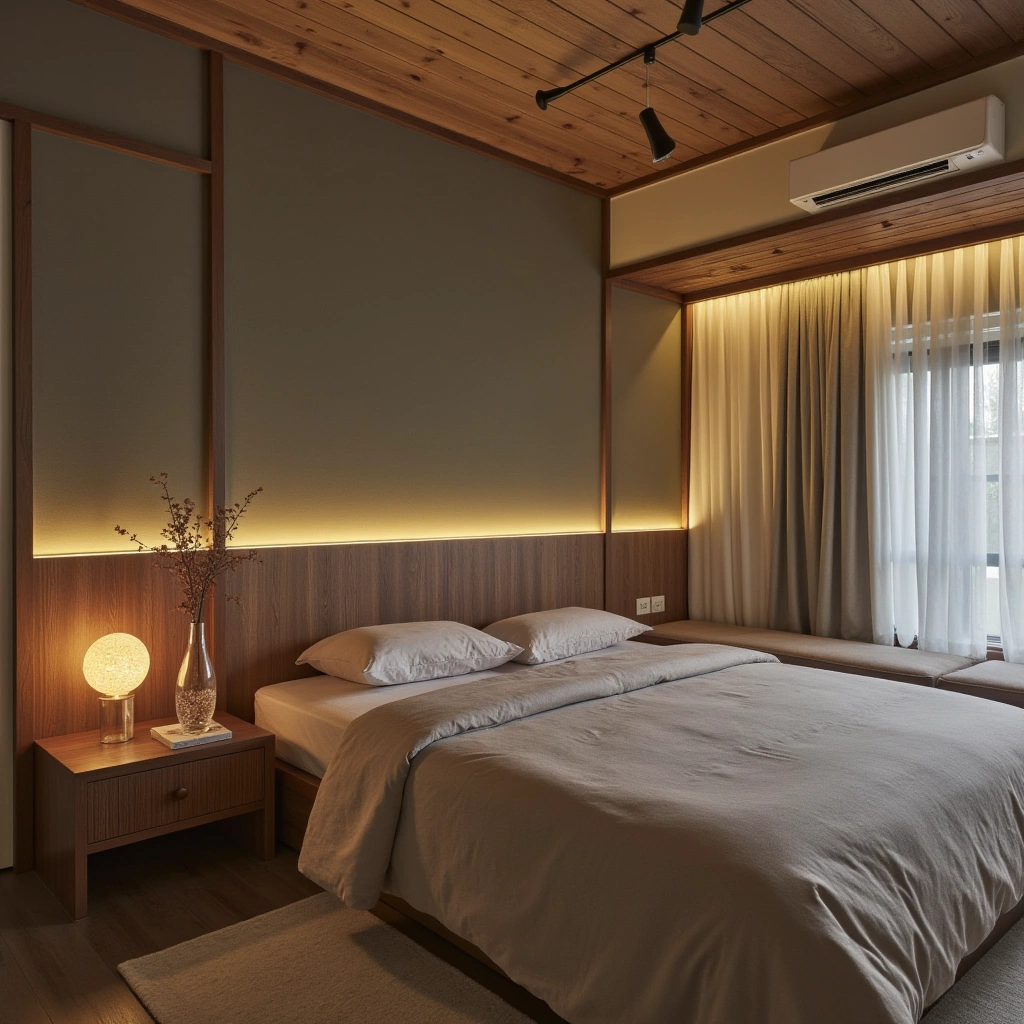
Layered lighting is essential in Japandi bedroom design, as it creates a sense of depth, dimension, and warmth. To achieve this look, incorporate a mix of ambient, task, and accent lighting throughout your space. Utilize floor lamps, table lamps, wall sconces, and pendant lights to create a soft, inviting glow that complements the dark wood furniture.
Implementation Tip: Experiment with different lighting options and placements to create a unique, personalized atmosphere in your bedroom. This design approach is adaptable and can be tailored to suit both traditional and contemporary homes.
With layered lighting covered, let’s explore how to create a sense of connection to nature through the use of organic materials.
Incorporate Organic Materials
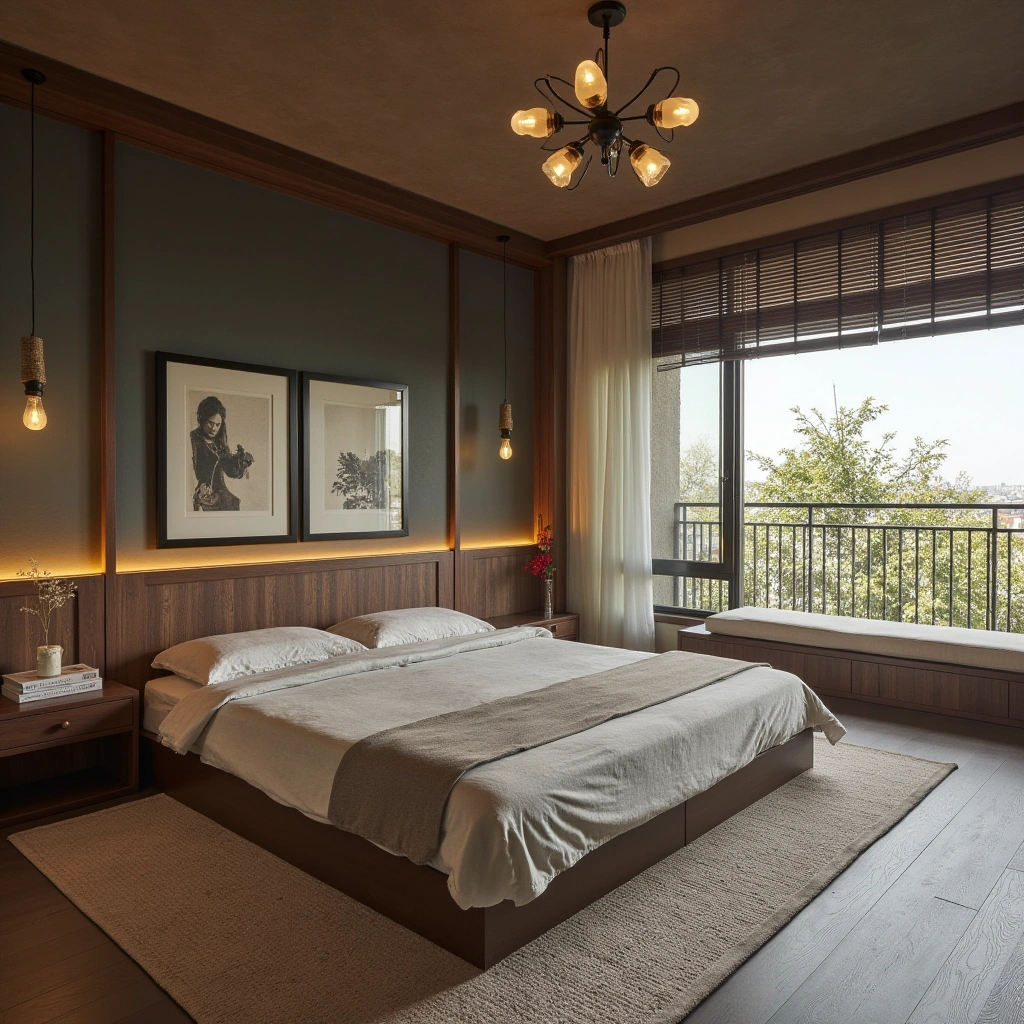
Organic materials play a crucial role in Japandi bedroom design, as they create a sense of connection to nature and reinforce the natural beauty of the dark wood furniture. To achieve this look, incorporate elements like rattan, bamboo, stone, and linen throughout your space, and opt for decorative accents that showcase the natural world, such as plants, botanical prints, and nature-inspired artwork.
Implementation Tip: Mix and match various organic materials to create a rich, textured look that celebrates the beauty of nature. This design approach is perfect for those seeking a sense of harmony and balance in their sleep space.
With organic materials covered, let’s discuss how to create a sense of warmth and richness through the use of dark, moody colors.
Embrace Dark, Moody Colors
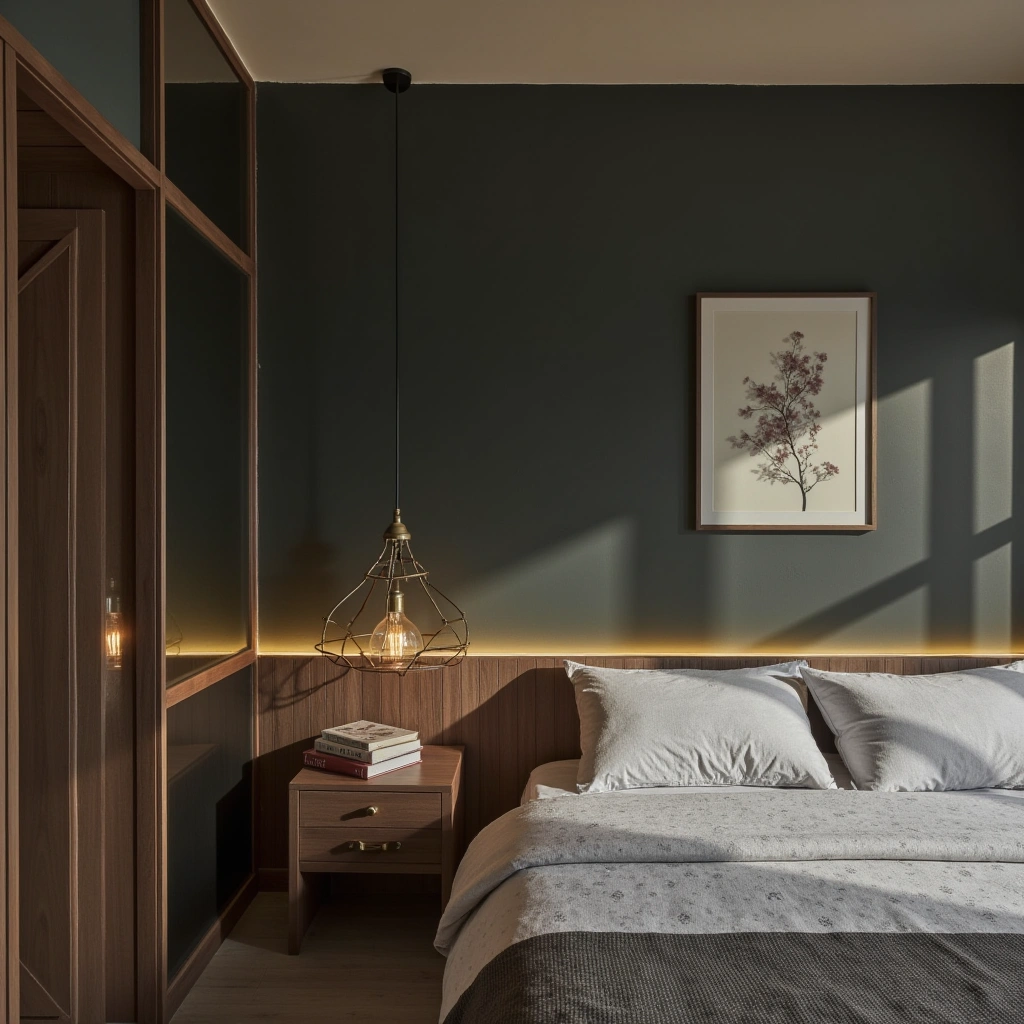
While Japandi design is characterized by its neutral color palette, incorporating dark, moody colors can add a sense of warmth and richness to your bedroom. To achieve this look, opt for deep, saturated hues like charcoal, navy, and forest green, and pair them with the dark wood furniture to create a dramatic, cocooning effect.
Implementation Tip: Balance the dark, moody colors with lighter, neutral shades to create a sense of harmony and prevent the space from feeling overly gloomy. This design approach is ideal for those seeking a sense of drama and intensity in their sleep space.
Having explored the use of dark, moody colors, let’s delve into the world of Japanese-inspired screens and explore how to incorporate these elements into your Japandi bedroom.
Utilize Japanese-Inspired Screens
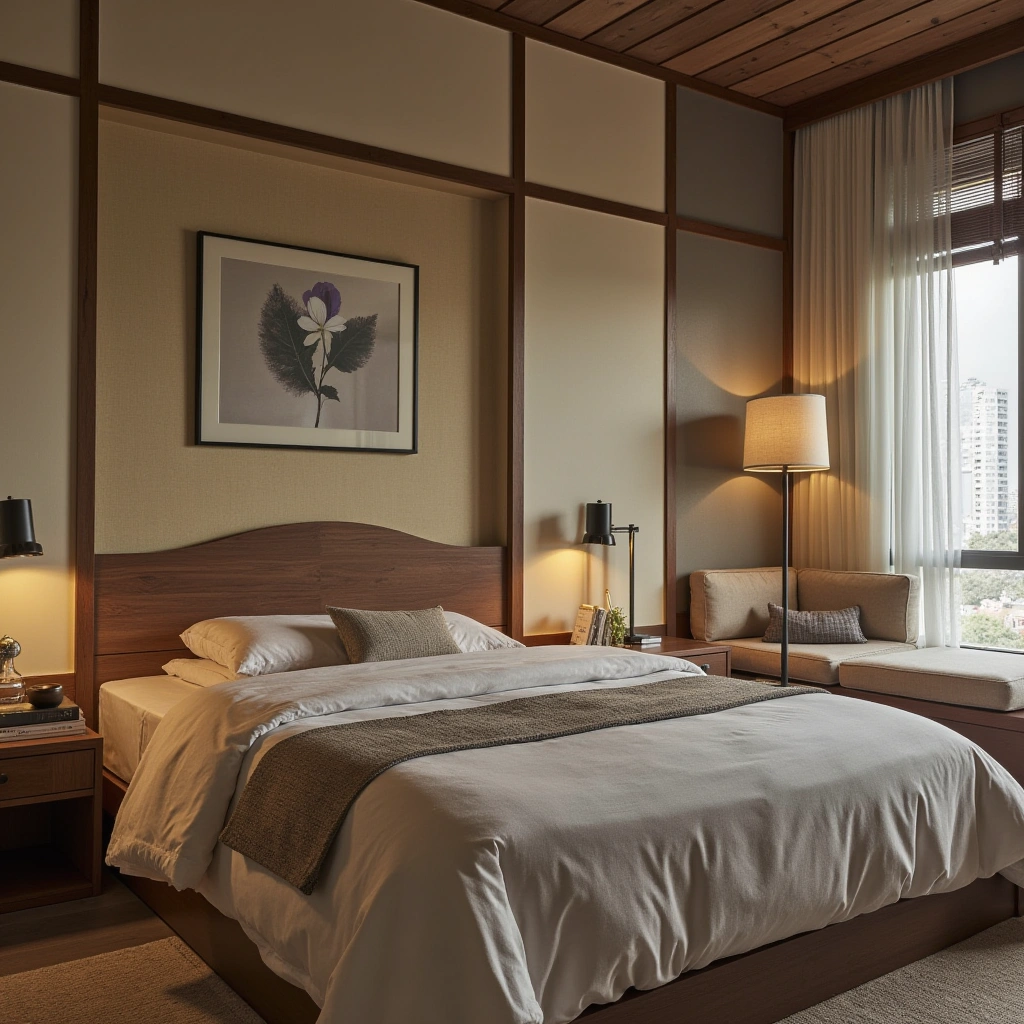
Japanese-inspired screens, or shoji, are a beautiful and functional addition to any Japandi bedroom. These versatile pieces can be used to divide the space, create privacy, or serve as a decorative accent. To incorporate shoji screens into your design, opt for dark wood frames with translucent paper panels, and position them strategically to create a sense of separation and intimacy.
Implementation Tip: Utilize shoji screens to create a cozy, secluded nook within your bedroom, perfect for reading, meditation, or relaxation. This design approach is well-suited to those seeking a sense of tranquility and privacy in their sleep space.
With Japanese-inspired screens covered, let’s explore how to create a sense of serenity and calm through the use of minimalist art.
Opt for Minimalist Art
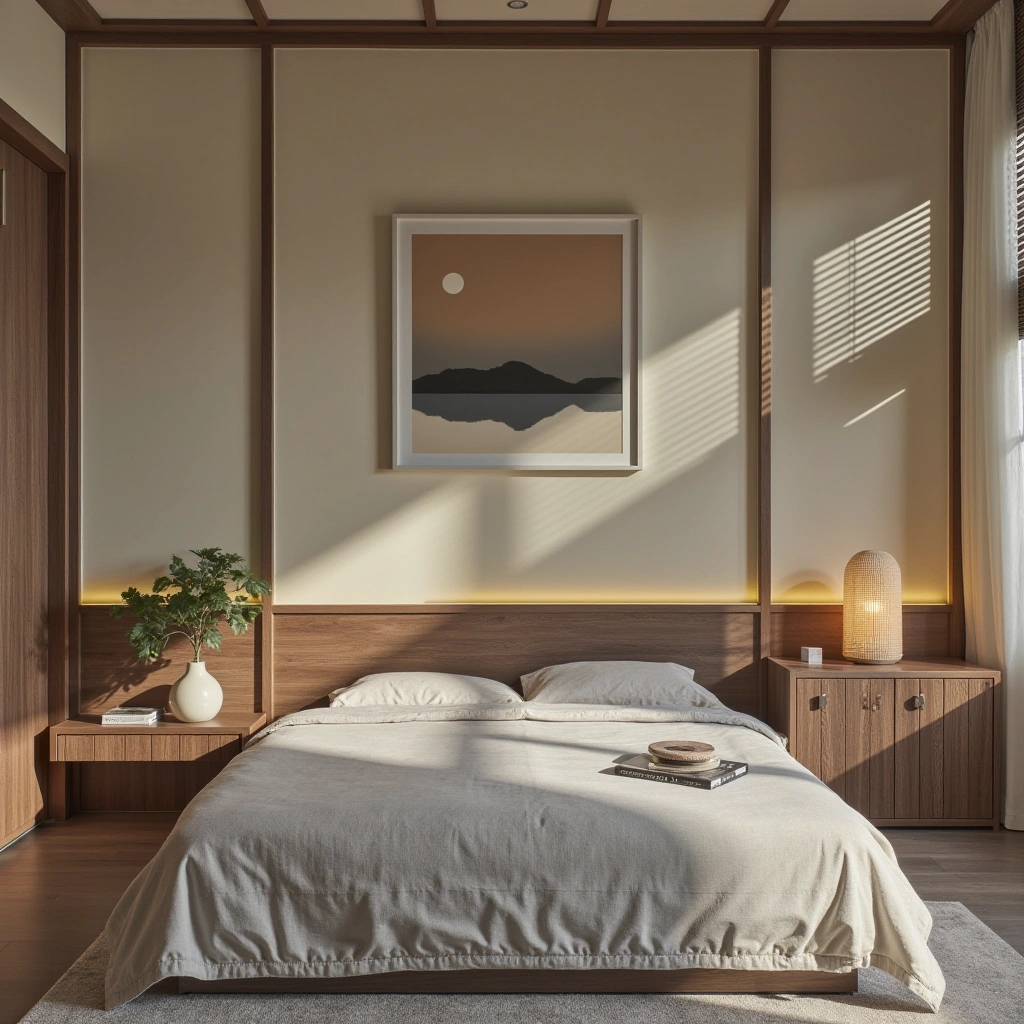
Minimalist art is a perfect complement to Japandi bedroom design, as it reinforces the principles of simplicity, balance, and harmony. To achieve this look, select artwork with clean, uncluttered compositions, and opt for pieces that showcase natural or abstract themes. Choose frames that complement the dark wood furniture, and arrange your art in a simple, symmetrical layout.
Implementation Tip: Create a gallery wall featuring a curated selection of minimalist art, adding a touch of personalization and visual interest to your space. This design approach is adaptable and can be tailored to suit both traditional and contemporary homes.
Japandi Dark Wood Bedroom
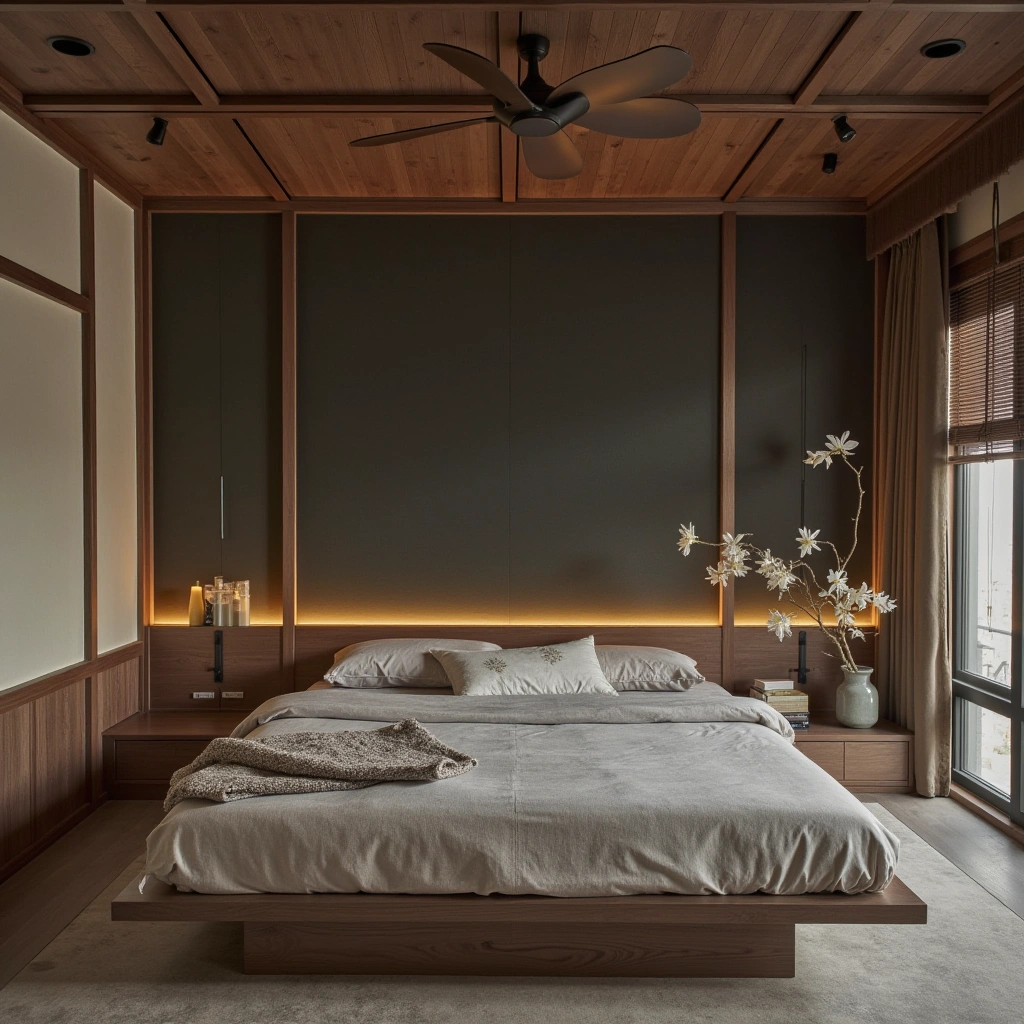
In conclusion, Japandi dark wood bedrooms offer a unique blend of Japanese minimalism and Scandinavian functionality, creating a harmonious and tranquil sleep space. By embracing the principles of Wabi-Sabi, asymmetry, and minimalism, and incorporating elements like nature-inspired decor, organic materials, and layered lighting, you can create a Japandi bedroom that is both stylish and serene.
Don’t be afraid to experiment with different design approaches and personalize your space to reflect your individual style. With these 18 Japandi dark wood bedroom ideas as your guide, you’re well on your way to creating the sleep sanctuary of your dreams.
